What is it?
Sockets and switches are electrical fittings used to provide power and control to lighting and appliances within a building. They are typically installed within walls and consist of a back box recessed into the wall and a visible faceplate fixed to the front.
The back box houses the electrical connections and is installed within the wall construction, often within metal or timber stud partitions. The faceplate is then fixed to the back box once the wall finish is complete, providing the final user interface.
These elements form part of the building’s electrical system and must be coordinated with the wall construction and other services.
- 1Cover Plate
- 2Back Box
What does it do?

Power supply
Sockets provide access to the electrical system, allowing appliances and equipment to be connected.

Control
Switches allow users to control lighting and other electrical circuits.
Where is it used?
- Internal walls in residential buildings
- Offices and commercial fit-outs
- Service risers and plant areas
Sockets and switches vary depending on function and design requirements.
Standard sockets
Provide power outlets for general use, typically installed at low level within rooms.
Switches
Used to control lighting circuits, commonly located near doorways.
Specialist outlets
Include data points, USB sockets, or outlets for specific equipment.
Back boxes
Available in different depths and materials, including metal and plastic, depending on wall type and installation method.
Faceplates
Available in a range of finishes and styles, from basic plastic to decorative metal finishes.
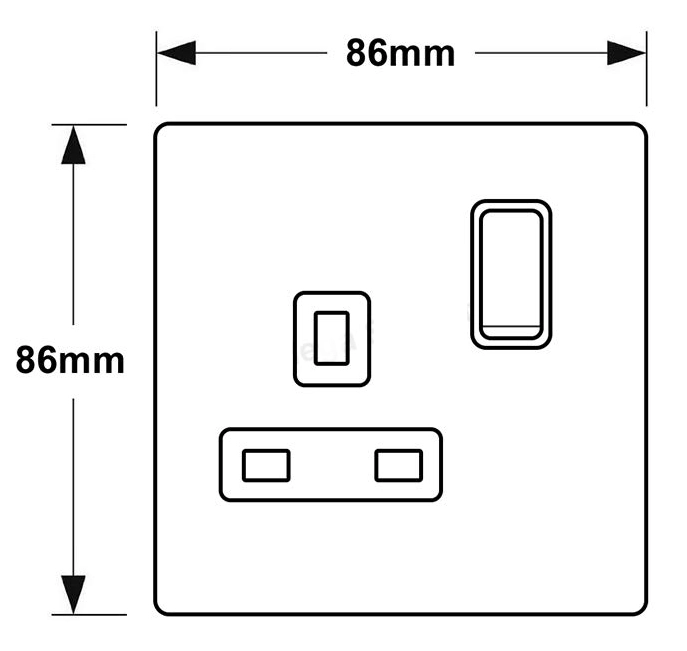
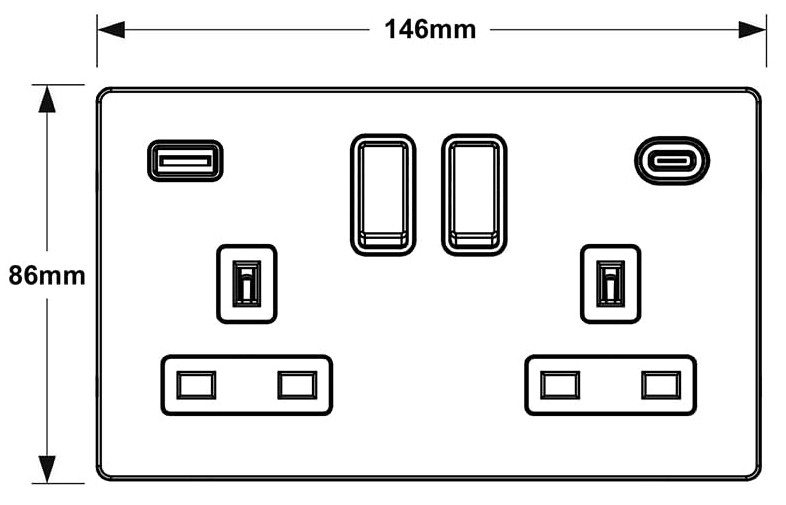
Typical sizes
Single Gang
Double Gang
How to specify
The quantity of sockets and switches are specified as part of the building’s electrical design rather than as isolated elements. The finish, which is mainly provided by the cover plate, is then decided by the architect
Define electrical requirements
The number, type, and location of outlets and switches are determined by the electrical design and user requirements. For example these may require two or three switches for controlling different lighting circuits.Select a range of sockets and switches
It is best to select all electrical accessories from a single manufacturer. This way you can ensure the same style and finish of each item. Manufacturers will often make different ranges at different price points.Coordinate with wall construction
Back box type and depth must be compatible with the wall build-up, including stud depth and plasterboard thickness.
Other considerations
Consider the sequence of construction. The back boxes and wiring are typically installed after the wall framing is complete but before plasterboard is fixed. Openings are then cut in the plasterboard to align with the back boxes.
The faceplates are fixed later, after the wall has been finished (e.g. painted), to avoid damage and to achieve a clean final appearance.
Care must be taken when positioning back boxes within stud walls. The depth of the box must suit the wall construction and allow sufficient space for wiring without clashing with insulation or other services.
Back boxes should not be installed directly back-to-back on opposite sides of a partition, as this can create clashes within the wall cavity and reduce fire and acoustic performance.
In fire-rated walls, penetrations for sockets and switches must be carefully detailed. Fire-rated putty pads or other protective measures may be required to maintain the fire resistance of the wall.
Interacting elements
Sockets and switches are integrated within wall constructions and interact with several other elements.
- Plasterboard: The faceplate is visible on the finished surface, and openings are cut into the board for the back box
- Metal studs or timber framing: A horizontal stud called a noggin must be installed behind the back box to allow for it to fixed.
- Acoustic insulation: Installed within the wall cavity and must be coordinated around back boxes
- Electrical wiring: Connects the accessories to the building’s electrical system
- Finishes: Paint or other finishes are applied before the faceplates are installed
- Fire protection measures: Such as putty pads, used to maintain fire performance at penetrations
Popular manufacturers

Hamilton Litestat
UK manufacturer specialising in decorative wiring accessories. Popular in high-end residential projects for their extensive range of finishes including brass, nickel, and chrome. Often specified by interior designers.

Forbes & Lomax
British manufacturer known for their Invisible Plate range, ultra-slim cover plates designed to disappear into the wall. A premium choice for minimalist and high-specification interiors.

BG Electrical
One of the most widely used brands in UK residential and commercial construction. The Nexus range covers sockets, switches, back boxes and cover plates in white plastic, brushed steel and polished chrome finishes.