Tiling
Tiling is the hard, washable finish on bathroom walls and floors: ceramic, porcelain or stone tiles bedded in adhesive with grout in the joints.
- Fitted by
- Tiler
- Wall tiles
- from about 100 x 100 mm to large format
- Floor tiles
- commonly 300 x 300 to 600 x 600 mm and up
- Joint width
- about 2 to 3 mm, wider for rustic tiles
- In the models
- Bathroom
What it is
Tiling is the finish of tiles bedded on the walls and floor of a bathroom, giving a hard surface that is easy to clean and stands up to water. Each tile is stuck down in a bed of tile adhesive, spread with a notched trowel, and the joints between them are filled with grout.
Tiles are ceramic, porcelain or natural stone. Porcelain is dense and absorbs very little water, so it suits floors and wet areas. The adhesive and grout are chosen to suit the tile, the board behind and any movement or heat, such as a timber floor or underfloor heating. Tiling is a finish, not waterproofing: water can get through the grout, which is why it goes over tanking.
What it does
- A washable, hard wearing surfaceTiles shrug off water, steam and cleaning products, and a glazed or porcelain tile wipes clean easily.
- Grip underfootFloor tiles are chosen for slip resistance, which matters most in a bathroom where floors get wet.
- The look of the roomThe tile size, colour, finish and layout set much of the bathroom's character.
Where you’ll find it
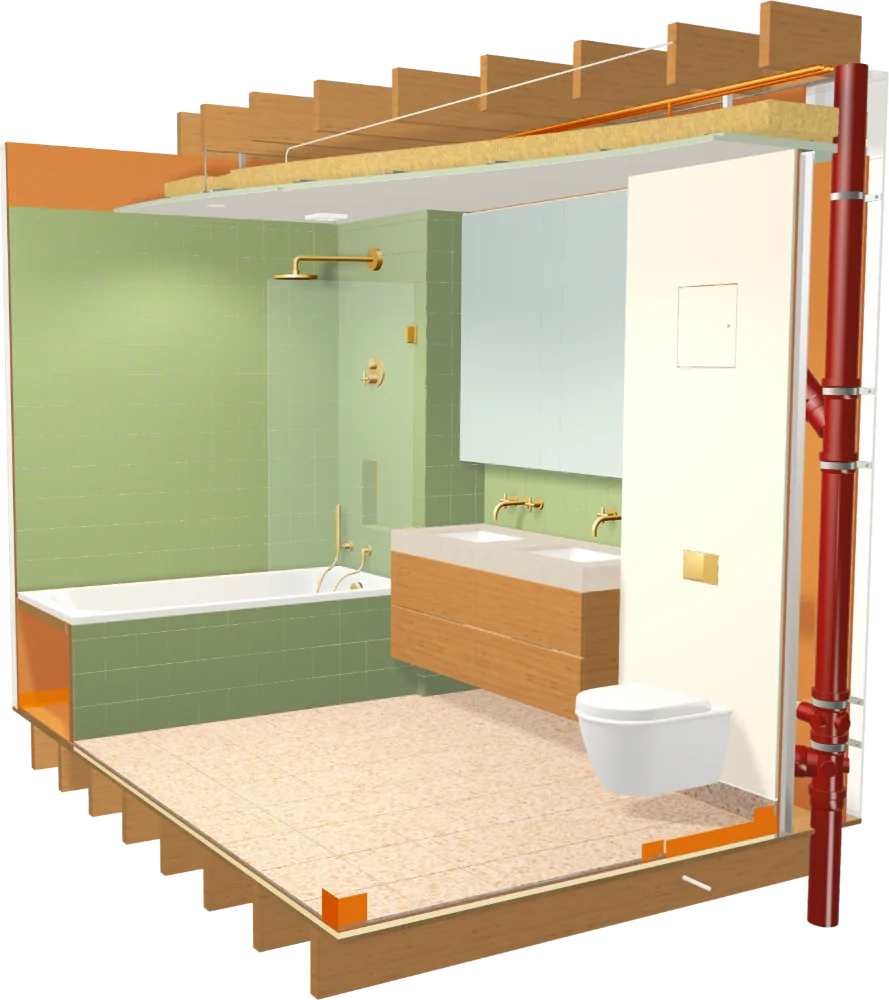
- Around the bath and showerOn every wall the shower can reach, often full height, and on the bath panel.
- FloorsAcross the bathroom floor, here over tanking and underfloor heating.
- Splashbacks and nichesBehind the basins, and lining recessed shower niches.
Types
Tiles are grouped by what they are made of, which sets where they can go and how they are fixed.
Ceramic
Glazed fired clay tiles, light and easy to cut, ideal for walls. Most are not tough enough for heavy floor use.
Sizes
Tile sizes vary hugely; the adhesive and grout are chosen to suit them.
- Wall tilesfrom about 100 x 100 mm to large format
- Floor tilescommonly 300 x 300 to 600 x 600 mm and up
- Joint widthabout 2 to 3 mm, wider for rustic tiles
- Adhesive beda few millimetres, combed with a notched trowel
- Adhesive and grout standardsBS EN 12004 and BS EN 13888
How to specify
Choose the tiles, adhesive and grout together, and to suit the board and any heating below, since a mismatch is what makes tiles crack or come loose.
- 1TilePick a tile suited to where it goes, with a slip resistant finish for the floor, and check its weight against the wall board.
- 2Adhesive and groutChoose an adhesive class for the tile and substrate, using a flexible one over timber floors or underfloor heating, and a grout suited to wet areas.
- 3Layout and movementSet out the layout so cuts are even and fall in sensible places, and plan movement joints at the perimeter, at changes of plane and over any joints in the structure, filled with a flexible sealant rather than grout.
Things to watch
Not waterproof. Grout lets water through over time. Always tile over tanking in wet areas.
Movement joints. BS 5385 calls for movement joints at the edges and changes of plane. Fill them with flexible sealant, not grout.
Flexible adhesive. Over timber floors and underfloor heating, use a flexible adhesive so the tiles can cope with small movements.
Full bed. Floor tiles and wet area tiles should be fully bedded with no voids, where water can collect and tiles can crack.
Slip resistance. Wet bathroom floors are slippery. Check the tile's slip rating for barefoot wet areas.
Sealing stone. Natural stone usually needs sealing before grouting and again from time to time.
Works with
Tiling works with the elements around it.
- Tankinglies beneath the tiles and keeps water out of the wall.
- Tile backer boardis the base the tiles are bonded to.
- Underfloor heatingunder a floor needs a flexible adhesive and grout.
- Bathmeets the wall tiles at a sealant joint along the rim.
Popular manufacturers
- Visit website
British Ceramic Tile
A British maker of wall and floor tiles in ceramic and porcelain, in a wide range of colours and finishes.
- Visit website
Mandarin Stone
A UK supplier of natural stone and porcelain tiles for walls and floors, including large format and decorative tiles.
- Visit website
BAL
A UK maker of tile adhesives, grouts and tanking, with products for wet areas, underfloor heating and timber floors.