Bath
A bath is the tub set against the walls of a bathroom, carried on feet or a frame and boxed in with a panel. Steel, acrylic and other materials compared.
- Fitted by
- Plumber
- Standard size
- 1700 x 700 mm
- Larger sizes
- 1800 x 800 mm and up
- Rim height above floor
- about 500 to 550 mm
- In the models
- Bathroom
What it is
A bath is the tub you lie in to wash, set against one, two or three walls of the bathroom and filled from a tap or a filler. It sits on adjustable feet or a timber cradle on the floor, its rim fixed or supported along the walls, and the open sides are closed with a bath panel. Below the plug hole a waste and overflow carry the water away through a trap.
Most UK baths are acrylic or enamelled steel, with cast iron, stone resin and composite at the top end. The material sets the weight, how warm it feels, how quiet it is and how it has to be supported. Because the bath is full of water and a person, it is one of the heaviest things in a home, and the floor, the frame and the seal to the walls all have to be planned around it.
What it does
- Holding a full bath of waterThe tub carries well over a hundred litres of water plus the bather, so it has to be stiff, level and properly supported on its feet or frame, with its rim resting on the walls.
- Shedding water and wasteThe bath falls slightly toward its waste, which carries water down through a trap to the waste pipe. The overflow guards against the bath being overfilled, and in many sets the bath filler sits in the overflow itself.
- Doubling as a showerWith a screen and a shower above, a bath becomes a shower bath, which is why the joint between the bath rim and the tiled walls has to be properly sealed and tanked.
Where you’ll find it
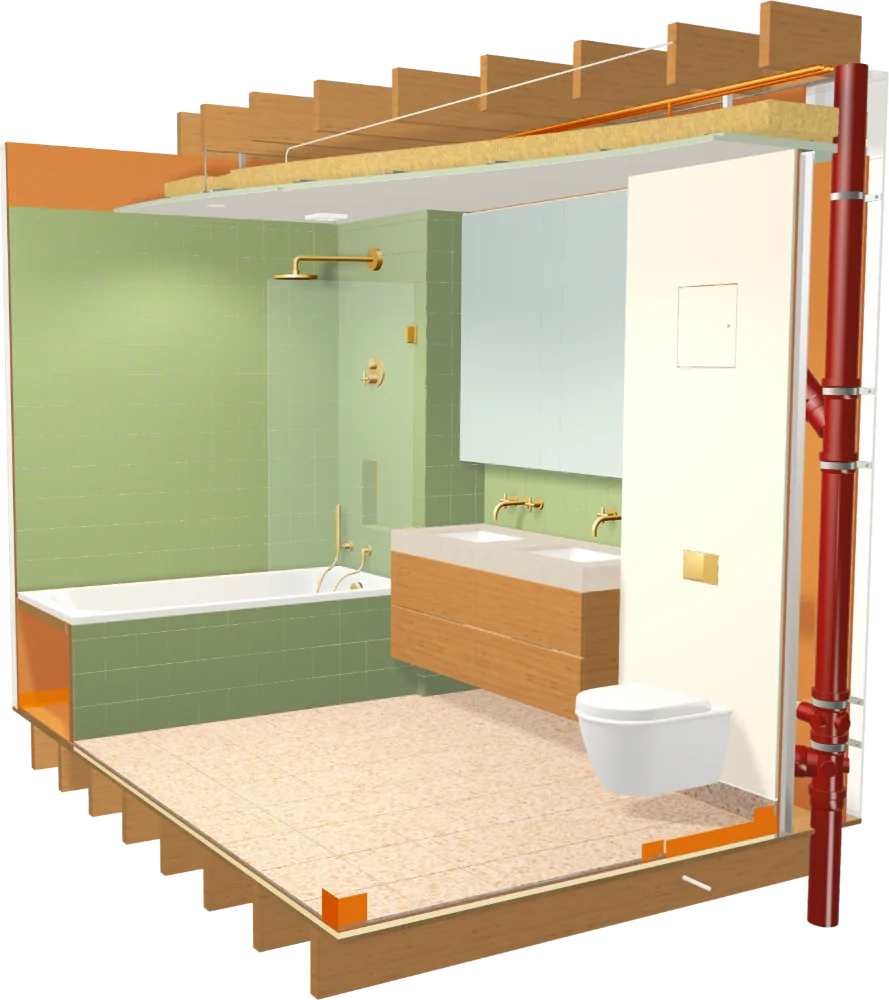
- Along a wallThe usual position, with one long side and both ends against walls and a single front panel. It is the easiest to tank and to fit a screen to.
- In a corner or recessSet between two walls with an end panel as well as a front panel, or fully recessed into an alcove between walls or service risers.
- FreestandingA bath standing clear of the walls, finished all round, with the filler on the floor or the wall. It needs its waste and supplies brought up through the floor beneath it.
Types
Baths are grouped mainly by what they are made of, which decides how heavy they are, how they are supported and how long the surface lasts.
Steel enamel
Pressed steel with a glass enamel surface fired on. Rigid, hard wearing and easy to clean, it sits on adjustable feet with sound pads beneath and does not flex. The steel is cold to the touch at first and the enamel can chip if something heavy is dropped.
Sizes
Bath sizes are given as length by width, with the depth to the overflow deciding how much water it actually holds.
- Standard size1700 x 700 mm
- Larger sizes1800 x 800 mm and up
- Rim height above floorabout 500 to 550 mm
- Waste40 mm
- Supply to the filleroften 22 mm, for a fast fill
How to specify
Choose the bath alongside the floor it stands on, the walls it meets and the shower over it, since the support, the seal and the access all depend on all three.
- 1Size, shape and materialPick the size and material to suit the room and the floor. Check a heavy cast iron or stone bath, full, against what the floor joists can carry, and get a structural engineer to confirm if in doubt.
- 2Support and panelSet out how it is carried: adjustable feet for a steel bath, a cradle or timber frame for acrylic, with battens on the walls under the rim. Plan the panel and a removable access panel at the waste end so the trap and connections can be reached.
- 3Filler, waste and sealingChoose the filler and the waste and overflow together, and how hot the water can be at the bath. Plan how the rim is sealed to the walls, especially if there is a shower over it, so water cannot get behind the bath.
Things to watch
Hot water safety. In a new home, or one formed by a change of use, Approved Document G requirement G3(4) limits the hot water delivered to a bath to 48 degrees, usually done with a thermostatic valve.
Filler below the rim. A filler set into the overflow sits below the rim, so the supply needs backflow protection under the Water Supply (Water Fittings) Regulations 1999. Here a pipe interrupter does that.
Weight on the floor. Allow for the bath full of water and a person, not just its empty weight. Cast iron and stone baths in particular may need the joists checking.
Sealing to the walls. The rim to wall joint is the classic leak. Tank behind the bath and seal the rim with a flexible tape or band before tiling, then a sealant joint, rather than relying on silicone alone.
Access. Leave a removable panel at the waste end so the trap, the overflow and the filler connections can be reached without breaking the tiles.
Noise. Sound pads under steel bath feet and a solid, well fixed panel stop the bath drumming as it fills.
Works with
The bath works with the elements around it.
- Tankingruns behind and under the bath and is sealed to its rim.
- Tilingon the walls stops on the rim with a sealant joint, and the panel is often tiled to match.
- Showerand bath screen turn it into a shower bath.
- Hot and cold suppliesfeed the filler, often through the shower valve.
- Soil and waste pipestake the water from its waste and trap.
Popular manufacturers
- Visit website
Kaldewei
A German maker of steel enamel baths and shower surfaces, with a wide range of sizes and shapes and options such as anti slip and easy clean finishes.
- Visit website
Bette
A German maker of glazed titanium steel baths, shower trays and basins, including the Bette Classic used in this model, with its own bath feet and fitting systems.
- Visit website
Carron Bathrooms
A British maker of baths, including its Carronite range, whirlpool baths and a wide choice of standard and shaped sizes.