Shower
A shower is a valve that mixes hot and cold water to a set temperature, and the heads it feeds: here a rain shower and a hand shower over the bath.
- Fitted by
- Plumber
- Valve height
- about 1000 to 1200 mm above the floor
- Rain head height
- about 2000 to 2200 mm above the floor
- Rain head size
- about 200 to 300 mm across
- In the models
- Bathroom
What it is
A shower is made of two parts: the valve, which takes the hot and cold supplies and mixes them to the temperature you set, and the outlets the mixed water comes out of, such as a fixed rain shower head overhead and a hand shower on a hose. In this bathroom the shower is over the bath, so the same valve also fills the bath.
The valve can be exposed on the wall or concealed, with its body built into the wall and only a trim and handles showing. A thermostatic valve holds the temperature steady even when someone runs a tap elsewhere, which is why it is the usual choice. How well a shower performs also depends on the water pressure and flow the home's hot water system can deliver.
What it does
- Mixing to a safe temperatureA thermostatic valve blends hot and cold to the temperature set and holds it there, shutting off if the cold fails, so the user is not scalded by a sudden surge of hot water.
- Sending water where it is wantedA diverter or a multi function valve sends the mixed water to the rain shower, the hand shower or the bath filler, one at a time or together.
- Delivering a good sprayThe heads turn the flow into a spray: a wide rain head overhead for a soaking, and a hand shower on a hose for rinsing and cleaning the bath.
Where you’ll find it
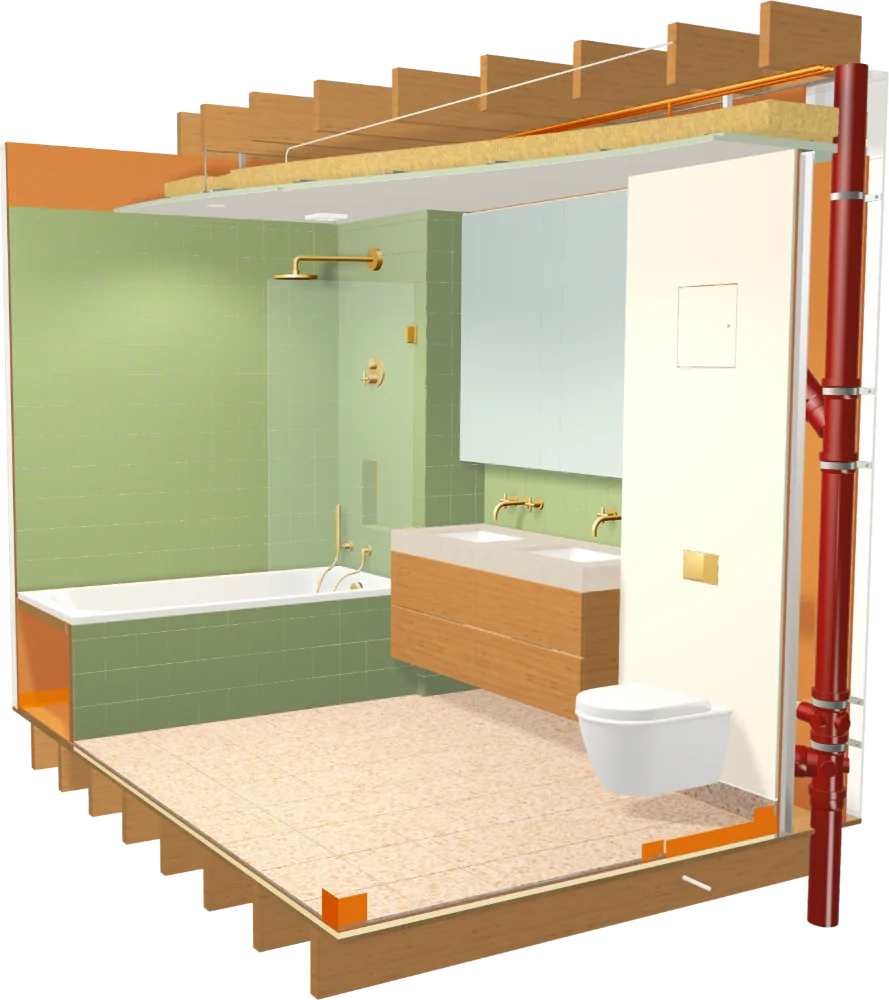
- Over a bathA shower bath, as here, with a screen on the rim and the valve on the wall at the tap end.
- In an enclosureOver a shower tray inside a glass enclosure, the usual choice where there is room for a separate shower.
- In a wet roomOver a tanked, tiled floor laid to a fall to a floor drain, with a fixed glass panel or no screen at all.
Types
Showers are grouped mainly by how the water is heated and mixed, which depends on the home's hot water system.
Thermostatic mixer
Mixes hot and cold from the home's hot water system and holds the set temperature. Exposed or concealed, with one or several outlets. The usual choice with a combination boiler or an unvented cylinder.
Sizes
Shower positions are set around the user and the bath or tray below.
- Valve heightabout 1000 to 1200 mm above the floor
- Rain head heightabout 2000 to 2200 mm above the floor
- Rain head sizeabout 200 to 300 mm across
- Supply pipes15 mm, or 22 mm to a large head
- Concealed body depthset to the maker's range behind the tile face
How to specify
Choose the shower with the hot water system, since the valve type and the heads have to suit the pressure and flow available.
- 1Hot water and pressureCheck what the home's hot water system gives: a combination boiler, an unvented cylinder on mains pressure, or a gravity system. Choose a valve and heads rated for that pressure and flow.
- 2Valve and outletsPick an exposed or concealed thermostatic valve with the number of outlets you need, such as rain head, hand shower and bath filler, and set out the valve, head and holder heights.
- 3Building it inFor a concealed valve, set the body to the depth range the maker gives behind the finished tile face, on a solid pattress, with isolating valves for servicing, and seal every outlet through the tanking.
Things to watch
Concealed body depth. A concealed valve body has a tight depth range behind the tile face. Set it against the finished build-up of board, tanking, adhesive and tile, not the studs.
Servicing. Concealed valves need isolation, often built into the body, so the cartridge can be changed without draining the system.
Pressure. A large rain head on a low pressure system will disappoint. Match the heads to the flow the system can give.
Water use. Big rain heads can use a lot of water and hot water. A flow limited head keeps a new home within the water efficiency target in Approved Document G.
Sealing outlets. Every pipe through a tanked wall needs a sealing collar bonded into the membrane, here KERDI-MV collars.
Limescale. In hard water areas, choose heads with flexible nozzles that can be rubbed clean.
Works with
The shower works with the elements around it.
- Hot and cold suppliesfeed the valve, with isolating valves for servicing.
- Pattressing and noggingscarry the valve body and the outlet elbows.
- Tankingis sealed round every pipe and the valve body with collars.
- Bathand bath screen sit below and beside it on a shower bath.
Popular manufacturers
- Visit website
Dornbracht
A German maker of high end brassware, including the concealed thermostat, rain shower and hand shower in this model, finished in a range of metals.
- Visit website
GROHE
A German maker of showers, valves and taps, known for its thermostatic shower systems and its concealed valve bodies that take many different trims.
- Visit website
Aqualisa
A British shower maker with mixer, digital and pumped showers, and a range built for UK hot water systems, including low pressure gravity systems.